Monday, September 26, 2022

Blog #146: STUDY FINDS NO SIGN OF BRAIN INJURY DESPITE RECURRENT FOCAL SEIZURES


A study analyzed brain tissue from 20 patients with recurrent drug-resistant seizures due to specific types of congenital abnormalities in brain cortex that promoted seizures from that focus. “Despite thousands of focal seizures over a lifetime, no signs of nearby cell loss nor of reactive inflammation—all signs indicative of brain damage—were seen…in the areas surrounding these type II focal cortical dysplasias studied,” researchers at the division of clinical epileptology and neurology at the Carlo Besta Neurological Institute in Milan, Italy reported.1

The researchers hoped their findings would encourage patients and reduce fears of brain damage associated with this specific type of congenital abnormal brain cortex cells causing their frequent seizures.

About 30% of epilepsy patients in general do not respond to pharmacological therapy and 30% of these patients can be candidates for surgery if the seizure focus can be identified and judged to be safe for removal. Those patients who are seizure-free after surgery that removes these specific types of abnormal brain cells can have their antiseizure drugs gradually withdrawn. Social life, quality of life and productivity improvements would be expected.

The frequency of seizures in this study of these specific brain cell types of abnormality ranged from one/month to 300/month. The duration of their epilepsy ranged from one to 40 years.

This study does not contradict substantial evidence that seizures in general can cause brain changes, especially in the limbic system, i.e., that area sensitive to memory function.


1)     Rossini L, Garbelli R, Gnatkovsky V, et. al. Seizure activity per se does not induce tissue damage markers in human neocortical local epilepsy. Ann Neurol 2017; 82: 331-334.


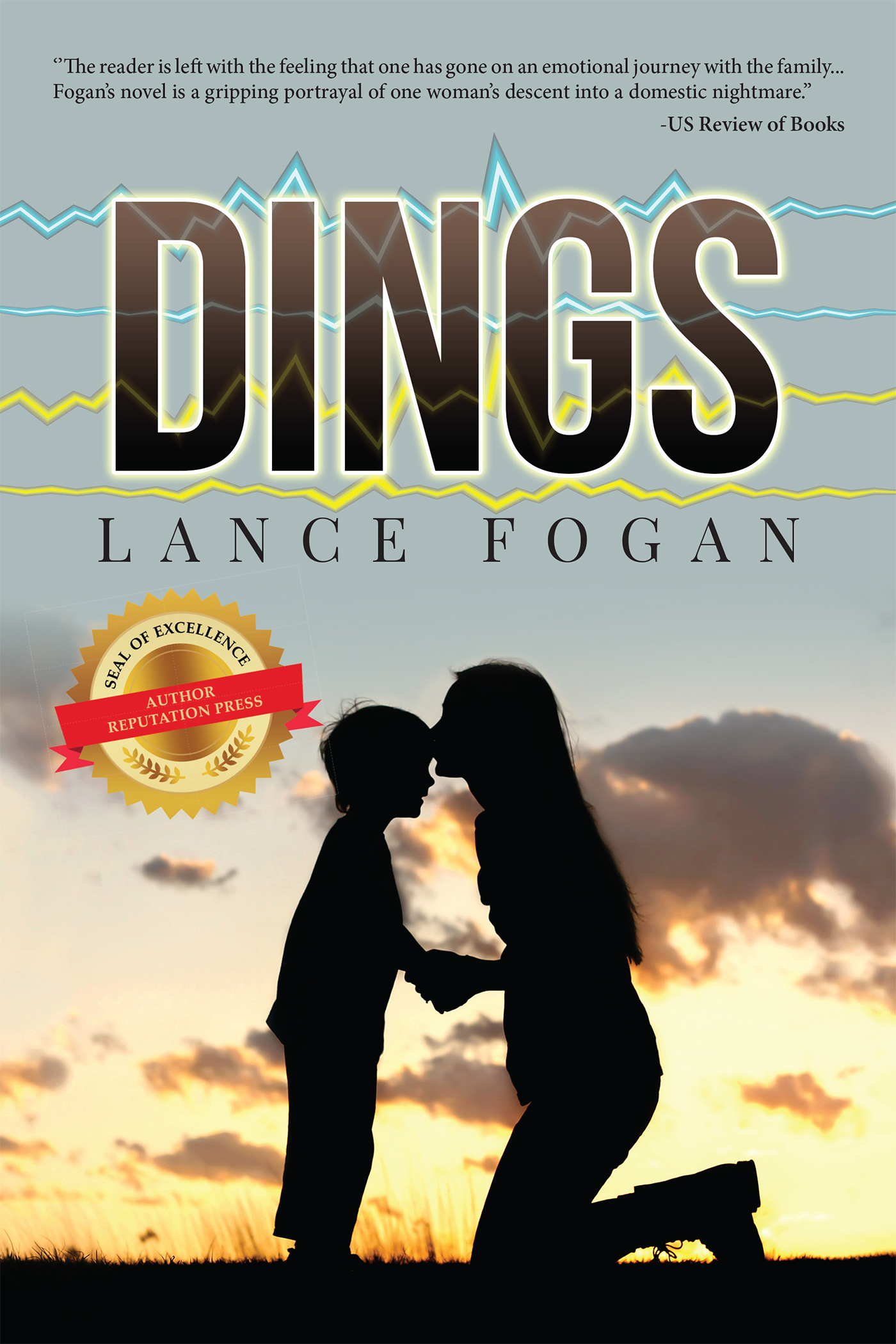
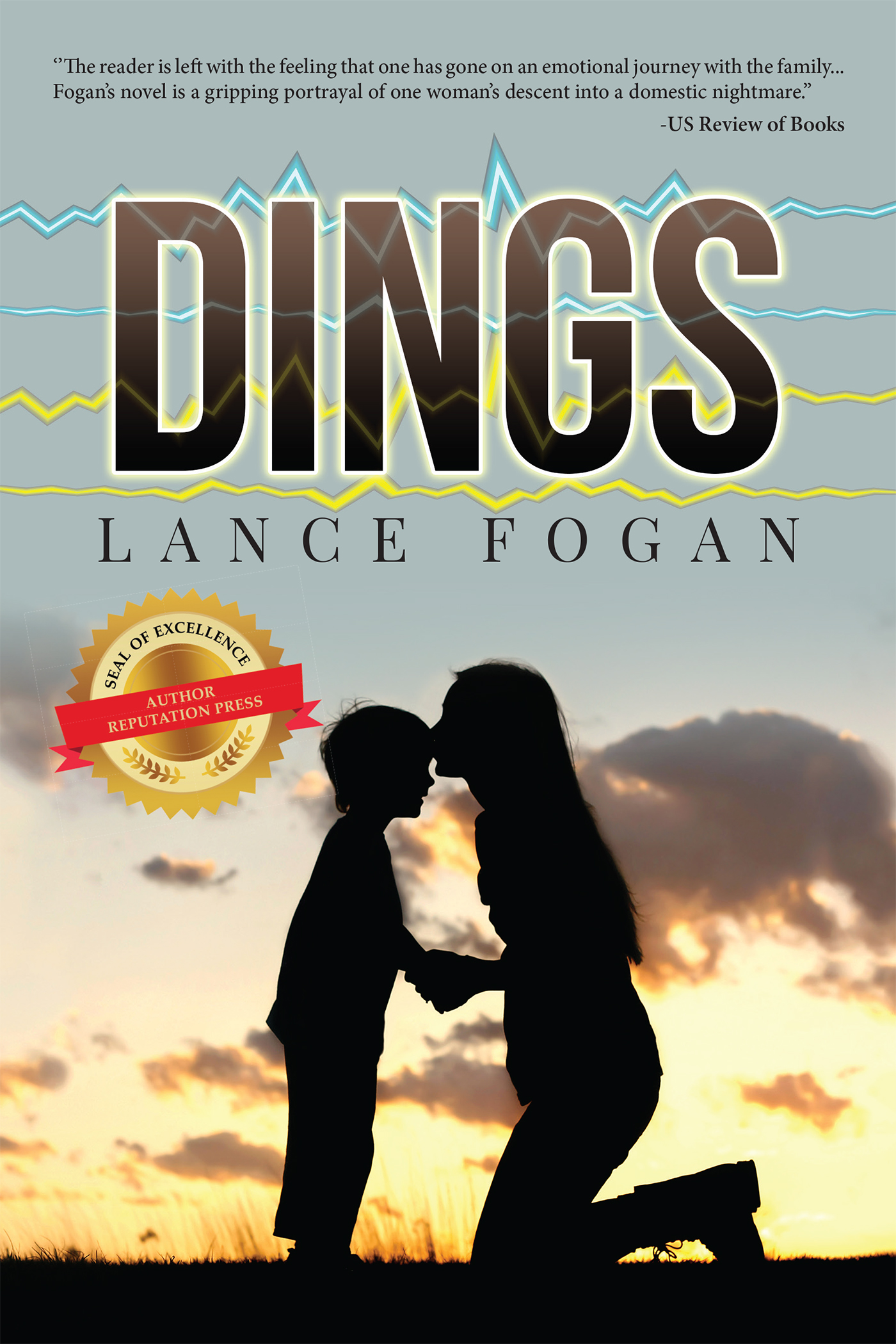
Lance Fogan, M.D. is Clinical Professor of Neurology at the David Geffen School of Medicine at UCLA. His hard-hitting emotional family medical drama, “DINGS, is told from a mother’s point of view. “DINGS” is his first novel. Aside from acclamation on internet bookstore sites, U.S. Report of Books, and the Hollywood Book Review, DINGS has been advertised in a recent Publishers Weekly, New York Times Book Review and the Los Angeles Times Calendar section. DINGS teaches epilepsy and is now available in eBook, audiobook, and soft and hard cover editions.


Thursday, August 25, 2022

Blog #145: Epilepsy Patient Passes Driving Test After Brain Surgery


Several of my previous 144 monthly blogs on LanceFogan.com dealt with brain surgery as a chance to improve, or even cure, epilepsy in those whose epilepsy is poorly controlled. (See Blog # 89 December 26, 2017: Surgical Removal of Seizure Foci in Your Brain to Cure Poorly Controlled Epilepsy is Safe!; Blog # 101 February 26, 2019: Epilepsy—Fit to Drive?; Blog # 114 January 26, 2020: Epilepsy Surgery in Childhood and Long-Term Employment Is Encouraging.; Blog # 121 August 25, 2020: If Your Seizures Aren’t Controlled Epilepsy Surgery Is Safe and Really Can Help).


The greatest chance to cure your uncontrolled epilepsy is by successfully removing the seizure focus surgically.

My clinical experience has shown that there is so much that can physically alter the brain anatomically by surgery and by unintended trauma that surprisingly results in undetectable, or barely detectable, changes in a patient’s mental and physical capabilities. I have examined people who have been shot in the head, the bullet entering one side traversing through parts of the brain and exiting the other side of the head sparing sensitive brain areas. When neurosurgeons and neurologists perform specialized types of EEGs and imaging scans anticipating epilepsy surgery, sensitive parts of the brain can be identified and avoided.

The BBC on-line service recently reported that a man with epilepsy says he finally has independence. A surgical procedure removed his epilepsy focus and he then was able to pass his driving test.1 The 40-year-old man had the brain operation eight years ago. Government rules meant the computer programmer from Birmingham was unable to take his driving test unless he was seizure-free for two years. But twice since learning to drive he had a seizure, setting him back each time and then Coronavirus lockdowns led to further delays. But eventually he was able to take the test and since passing, plans to take his young family on regular camping trips.

The man said he never thought he would be able to drive after living with epilepsy since childhood. But he underwent lesion resection, which involved inserting electrodes into his brain to detect electrical activity and carefully removing abnormal tissue.

Discuss possible epilepsy surgery with your neurological caregivers.


1)    Epilepsy Patient Passes Driving Test After Complex Surgery. https://www.bbc.com/news/uk-england-birmingham-62568014. Aug 16, 2022.


Lance Fogan, M.D. is Clinical Professor of Neurology at the David Geffen School of Medicine at UCLA. His hard-hitting emotional family medical drama, “DINGS, is told from a mother’s point of view. “DINGS” is his first novel. Aside from acclamation on internet bookstore sites, U.S. Report of Books, and the Hollywood Book Review, DINGS has been advertised in a recent Publishers Weekly, New York Times Book Review and the Los Angeles Times Calendar section. DINGS teaches epilepsy and is now available in eBook, audiobook, and soft and hard cover editions.


Monday, July 25, 2022

Blog #144: “Should I tell people I have epilepsy?” What do neurologists with epilepsy do?


Your insecurities, your anger, and frustrations about your epilepsy are not unique to just you. A neurologist in south Florida had to be driven to her clinic by her husband and picked up at the end of the day. This neurologist has left temporal lobe epilepsy for 16 years. Her focal seizures secondarily generalized into convulsions. Now, well controlled, this director of an epilepsy clinic worries about having breakthrough seizures. That’s why she concentrates on getting enough sleep and she counsels her patients to do the same. Her stress is managed by meditation and exercise.1


Neurologists with epilepsy are more forgiving of their patients who occasionally lapse in their medications and self-care. They can relate. Having the condition has made these neurologists more compassionate and understanding of their epilepsy patients. They, too, feel the embarrassment and stigma that comes with epilepsy. One neurologist who has had epilepsy since she was an infant, relates that she tells people that the epilepsy doesn’t change who they are or what they do. It doesn’t mean they can’t achieve their goals and what they can accomplish in life. Despite a right temporal lobectomy after three different anticonvulsants failed to control her seizures, seizures recur every few months. Her seizures awaken her—she has a head rush and lip smacking and her left-hand clenches. Epilepsy worries are there for her every day. She avoids alcohol and tries to get adequate sleep.


One neurology chief of department and epilepsy specialist was diagnosed with “probable epilepsy” at age 16. Then a tumor was found. He has had no seizures since brain tumor surgery 29 years ago. One of his earlier convulsions caused a spinal fracture from the intense muscle contractions. He took anticonvulsants for 5 years after the brain surgery and has had no further seizures for 30 years. “Because I shared my story, some patients want to see me because they know I can understand and I can relate.” This neurologist helps epilepsy patients find a balance between their personal safety and their independence and autonomy.


Other neurologists with epilepsy don’t always disclose their condition, but they do if they feel it will convey more confidence that I understand what they are going through and how it will affect them long term. It’s advised that one needs a core group of people who know about their epilepsy. Wear an epilepsy ID bracelet/necklace to avoid interventions that could be unnecessary and risky if others are unaware of your epilepsy. The more people around you who know, the safer you will be and the better quality of your care.


Tell others of your epilepsy: “If I have a seizure, stay with me, and put me on my side to keep me safe. Don’t try to restrain my shaking or put anything in my mouth. The shaking will stop in a minute or two and then I’ll be sleepy and confused. Stay with me.”


1.)   Colino S. My neurologist has epilepsy. Brain and Life. June/July 2022 p24-27.


Lance Fogan, M.D. is Clinical Professor of Neurology at the David Geffen School of Medicine at UCLA. His hard-hitting emotional family medical drama, “DINGS, is told from a mother’s point of view. “DINGS” is his first novel. Aside from acclamation on internet bookstore sites, U.S. Report of Books, and the Hollywood Book Review, DINGS has been advertised in a recent Publishers Weekly, New York Times Book Review and the Los Angeles Times Calendar section. DINGS teaches epilepsy and is now available in eBook, audiobook, and soft and hard cover editions.


Friday, June 24, 2022

Blog #143: Is Your Epilepsy Controlled? If Not, Perhaps There's a Genetic Cause


Advances in genetics have benefited epilepsy and other neurological diseases. Genetics is currently an important part of epilepsy diagnosis. A half century ago, when I was in neurological training, bacterial, fungal, and other identifiable infections and afflictions could be identified. They could be seen in the microscope and in cultures in the laboratory. When these tests and searches were negative, however, we would usually settle on an elusive virus diagnosis. Viral diseases were often difficult to prove. Then, we were so ignorant in dealing with many diseases, as patients know.

Neurogenetic advances over past decades have shown that genetic abnormalities in our bodies can be identified. These advances improve making a diagnosis and can even bring hope for treatment in previously untreatable diseases. Dr. Deepa S. Rajan, Director of the Neurogenetics Clinic at the University of Pittsburgh Medical Center Children’s Hospital teaches that genetics is currently an integral part of neurological disease diagnosis. “Epilepsy and other diseases are being looked at with fresh eyes.”1

When MRI scans and other sophisticated medical tests show no obvious cause for epilepsy, genetic testing is available. Genetics could show a reason and should be considered. Dr. David Bearden, assistant professor of neurology and pediatrics at the University of Rochester, finds: “If you take all patients with treatment-resistant epilepsy and early-onset epilepsy, we can find a genetic cause in 30-50 percent. However, in kids seizures that respond to the first-line drugs and whose seizures are controlled, a genetic cause usually is not demonstrated.”2

For example, finding the genetic underpinning in an infant with seizures might show the genetic mutation associated with increased or decreased sodium activity in cells. Sodium channel-blocking drugs could benefit one patient whereas another gene could be found associated with decreased sodium channel function; in these patients, blocker-medications should be avoided. Also, genetic knowledge may benefit prognosis and more accurately predict prognosis, “Your child is likely to grow out of this, or not.” The work of understanding the mechanism of genes and genetic pathways is far from complete.

Amyotrophic lateral sclerosis (Lou Gerhig’s disease) that wastes muscles and is usually fatal and Alzheimer’s disease are more common neurological diseases that have benefited from genetic advances.


1)    Rajan D.S. Neurology Today: June 2, 2022; pg 8.

2)    Bearden. D. Neurology Today: June 2, 2022; pg 8.


Lance Fogan, M.D. is Clinical Professor of Neurology at the David Geffen School of Medicine at UCLA. His hard-hitting emotional family medical drama, DINGS, is told from a mother’s point of view. “DINGS” is his first novel. Aside from acclamation on internet bookstore sites, U.S. Report of Books, and the Hollywood Book Review, DINGS has been advertised in a recent Publishers Weekly, New York Times Book Review and the Los Angeles Times Calendar section. DINGS teaches epilepsy and is now available in eBook, audiobook, and soft and hard cover editions.


Wednesday, May 25, 2022

Blog #142: DID YOU FIND YOUR ACCESS TO EPILEPSY CARE AFFECTED BY COVID?


Did the COVID-19 pandemic affect your ability to obtain adequate care for your epilepsy? The National Association of Epilepsy Centers (NAEC) noted significant impact by the pandemic.1 Most evaluations and procedures in the United States for drug-resistant epilepsy, i.e., for persons whose epilepsy is not free of break-through seizures despite treatment, decreased in number.


Epilepsy centers saw pandemic-caused widespread changes in hospital practice. Access to specialty epilepsy care decreased in 2020 compared to 2019 with 21,515 fewer epilepsy monitoring unit admissions in 2020, a 23% decline. This resulted from restrictions on elective admissions, reduced staffing, and patient reluctance for elective admission.


Aggregate surgical treatment for epilepsy declined by 371 cases (5.7%) with the largest reduction for vagus nerve stimulation implantations (2622 and 2136 cases in 2019 and in 2020, respectively, a 19% decline). Temporal lobectomies (1465 and 1238 in 2019 and 2020, respectively, a 16% decline. All other procedure volumes increased: the number of corpus callosotomies (splitting the right and left cerebral hemispheres connections) increased from 2019 to 2020 by 35%.


All these studies had the limitation of self-reporting of administrative data which is subject to inaccuracies or bias.


1)     AM Ahrens, AP Ostendorf, FA Lado, et.al. Impact6 of the COVID-19 Pandemic on Epilepsy Center Practice in the United States. Neurology. 2022; 98 (19):e1893e1901


Lance Fogan, M.D. is Clinical Professor of Neurology at the David Geffen School of Medicine at UCLA. His hard-hitting emotional family medical drama, “DINGS, is told from a mother’s point of view. “DINGS” is his first novel. Aside from acclamation on internet bookstore sites, U.S. Report of Books, and the Hollywood Book Review, DINGS has been advertised in a recent Publishers Weekly, New York Times Book Review and the Los Angeles Times Calendar section. DINGS teaches epilepsy and is now available in eBook, audiobook, and soft and hard cover editions.


Monday, April 25, 2022

Blog #141: A FAMILY DEALS WITH UNRECOGNIZED EPILEPSY: Excerpted from Dr. Lance Fogan’s novel, DINGS. Chapter 24, Part 3


Continuing In the Neurologist’s office—making the diagnosis—the little boy admits to his spells under sophisticated questioning.


“Sandra.” Sam reached for my hand. I snatched it away.

I pressed my lips together and shook my head. “I don’t believe this!”

“Conner, when did these dings start?” The doctor asked. His voice was gentle and even. I looked at my lap and tried to organize my thoughts. Dr. O’Rourke continued, “Do you remember when you had the first ding, your first one?”

“I—I don’t know.”

“Well, did they start a month ago? A few months ago? Before Christmas? Did they start last year, when you were still in second grade? Or, even before that? When do you think?” He smiled at our son. “Take your time. You’re doing very well, Conner.”

“Last year…um…I think, when I was in second grade. Yeah…ahh…second grade. I think...”

“And what do you mean by what you call ‘dings,’ Conner?”

“They’re dings because…uh, uh…I guess, because they feel like, uh…like little dings. You know…I don’t know.”

The doctor nodded and regarded him for several seconds. “What does a ding feel like?”

“Um…I get this funny thing…I think it’s down here.” Conner looked down and touched his shirt right over his bellybutton. “Then I get scared…but I don’t know why because there’s nothing around to make me scared. You know. Then I smell that bad thing. And then…I don’t know! I don’t know!” He sniffed and wiped his nose with his sleeve.

Dr. O’Rourke directed a quick gaze at us and then back at Conner. “How long do the dings last, Conner?”

“I don’t know!” He started to sob again. I flashed a weak smile at the doctor as I wiped my son’s cheeks and put the tissue into his hand.

“Have you ever fallen down when a ding happens? Do they ever happen when you’re standing up?”

He sniffed. “No…um…but, yeah, sometimes I fall when I’m running or playing a game.”

Dr. O’Rourke smiled at him. “Do you think you fall because you’re having a ding?”

“No.” He snorted and wiped his nose with the tissue. “I’m just playing and…uh…I trip on something or somebody tackles me. But, sometimes I drop things…you know…when I have a…um…a ding.”

“Oh, Conner. Why didn’t you ever tell me you were having these things?” I tried to smother the panicked tone in my voice as I brushed a lock of hair out of his eyes. “Honey, have you had these dings at home? Have I ever been with you when they happen?” I turned back to the neurologist, “I can’t recall seeing anything like what he’s describing, Doctor.”

“I don’t know when they happen, Mommy.” He sniffed again and rubbed his nose with his sleeve. “I don’t.”

The office was quiet now except for his sobs. It shimmered with the vibrations of our fear and pain—a pain that pierced and gripped me completely—an agony that I would carry and remember for the rest of my life. Whatever happened to my son would change—no, it had already irrevocably changed—our lives. Just weeks ago we were having the happiest of days: Sam came home from Iraq; we pulled into our driveway with him; neighbors welcomed him home; he put on his old clothes; the gifts he gave us; that wonderful first dinner with candles…

“Has Conner had any problems with bed-wetting?” Dr. O’Rourke asked me.

“Hm? Oh, ah…bed-wetting?” I looked at Conner. This was not the time to shelter him—not here in this office. “There’ve been a few times, and he’s had a few accidents in his pants during the day. On laundry days—a few times I’ve found yellow stains on his underpants. They smelled like he had wet them.”

Conner moaned, “Mo-om!” and looked up at me, his eyes pleading.

I placed my palm on the top of his head. “Honey, I’m so sorry. I don’t mean to embarrass you, but this is important. The doctor has to know.”

“Conner, do you lose your urine—your pee—during these spells?” The doctor asked softly.

“We-ell...” Conner looked at me.

I nodded. “You can answer the doctor, Conner.”

He said, “Um…yeah.”

“Do you know that you’re going in your pants and you can’t stop it? Or is it that all of a sudden you’re wet and you didn’t know that you were going?”

“I-I d-don’t know that I-I’ve done it until I-I’ve d-done it,” Conner stammered through his sobs.

“Have you ever pooped in your pants?” Dr. O’Rourke’s voice was so low that I could barely make out what he said.

Conner gulped down a sob.

The neurologist cast a quick glance from Conner to us. “Has he had any bowel movements in his pants?”

“No, thank God.” I shook my head.

“Has Conner ever bitten his tongue or lip when he’s sleeping? Have you ever found blood on his pillow, Mrs. Golden?”

“Only on the night of his seizure, Doctor. I’ve never seen blood any other time.”

“So, it seems that he hasn’t had any other convulsions in his sleep that you and Mr. Golden had not witnessed.”

I shook my head and looked at Sam.

Dr. O’Rourke smiled at his patient and asked, “Conner, have you ever noticed any weakness in your arms or legs when you have a ding? It can be before the ding or after it, or at any other time.”

“No.” Conner shuddered.

“Good. What about tingling feelings? Have you ever had any tingling—you know, like the pins-and-needles you get if you hit your funny bone in your elbow—anyplace in your body when you have a ding?”

“Uh…no. I don’t think so.”

I wanted to know more, as I listened to their exchange. Yet, I feared more bad news.

“Conner, have you had any headaches or double-vision? You know, like seeing two things instead of one thing. And, do you ever have any trouble seeing out of one eye? Or numbness, like funny feelings that stay there on your face?”

“My face itches, sometimes.” Conner scratched his cheek.

“Well, yes. That’s normal. What about any funny or tingly feelings on your face when you get your dings?”

“No.”

“What about swallowing or hearing problems? Do you ever hear strange noises or voices when there’s no one talking and no one else around during your dings?”

“No.” Conner shook his head.

“Which hand do you write with, Conner?”

“Um, my right hand.” The boy held up his left hand, looked at it and quickly replaced it with his right. He turned toward me and gave me a tentative smile. He asked abashedly, “Is this my right hand, Mom?”

“That’s good,” Dr. O’Rourke said with a wide grin. He looked at me. “He is right-handed, correct?”

“Yes. He seems to write and draw with his right hand, Doctor.”

I looked at Sam. So, he finally spoke up.

“Since he writes with his right hand, the middle section of the left side of Conner’s brain is where his language center resides. In other words, it’s his dominant side. That suggests that there’s no serious structural problem in that part of Conner’s brain, especially since he had a normal CT scan. You see, the left side of the brain is dominant for most people. If you or your son reported that he had speaking or comprehension problems—that is, difficulties understanding speech—it could be a clue that his seizures came from that left-sided language area. However, he will need an MRI—a Magnetic Resonance Imaging scan, with—”

“What’s that? No! Will there be needles?” Conner leapt to his feet. Sam and I immediately reached up and touched his shoulders.

“Sit down, son.” Sam tilted his head in the direction of the boy’s seat.

Conner dropped hard onto his chair. He elevated his shoulders, opened his mouth and squinted at the neurologist. His voice quivered, “Will there be needles? Will there?”

“The MRI scan is just like the CT scan you had at the hospital. But, this time you’ll be in a tunnel.” The neurologist moved his gaze from Conner to Sam and then to me.

“Conner wasn’t awake when he had the CT scan, Doctor O’Rourke. He was still asleep after the seizure.”

“Oh. Okay. I see.” He nodded and turned back to his patient. “Well, Conner, there shouldn’t be any needles, but I can’t promise. That will be up to the radiologist. That’s the doctor who does the MRI. The radiologist will be evaluating the images as the scan is being done. If the doctor believes that more information is required, then an intravenous line may be started to inject a special dye, but—”

Conner pouted and crossed his arms over his chest. His swollen, red eyes welled up again.

“No. Wait, Conner! That won’t be done unless it’s absolutely necessary.” Dr. O’Rourke reached across the desk and touched our child’s hand. “The MRI shows the brain structures a little differently from the CT scan. It can give us additional, more detailed information. We—the doctors—need to be certain to rule out any problems.

“Look, Conner. We are going to become a team. From now on, we are going to be working—like playing—together, for a long time. I am going to be your coach. You are the star player. I will give you your rules and your plays. Your mom and dad will be like our team trainers. I’ll tell you what the team will do.”

I liked that metaphor. It should capture Conner’s cooperation. Brilliant. I smiled at my son and touched his back.

Dr. O’Rourke watched us momentarily, then continued, “I know this can all be confusing, but usually we don’t find any cause of epilepsy.”


Lance Fogan, M.D. is Clinical Professor of Neurology at the David Geffen School of Medicine at UCLA. His hard-hitting emotional family medical drama, “DINGS, is told from a mother’s point of view. “DINGS” is his first novel. Aside from acclamation on internet bookstore sites, U.S. Report of Books, and the Hollywood Book Review, DINGS has been advertised in a recent Publishers Weekly, New York Times Book Review and the Los Angeles Times Calendar section. DINGS teaches epilepsy and is now available in eBook, audiobook, and soft and hard cover editions.
Thursday, March 24, 2022

Blog #140: Blinking Lights, Flashes and Epilepsy


     Light flashes, light patterns and color changes can provoke seizures in 3% of people with epilepsy. This is known as photosensitive epilepsy.1 Is this you? Photosensitive epilepsy is more common in children and adolescents, especially those with generalized epilepsy and certain syndromes as juvenile myoclonic epilepsy. It lessens as children age. Relatively few cases last into their mid-twenties.


     Many people are not aware they are sensitive to flickering lights or to certain patterns until they have a seizure. In some individuals, their seizures occur only when triggered by certain photic, or light conditions. And in some individuals this sensitivity may never progress to develop epilepsy. Some people find they are sensitive to light exposure because they develop headache, nausea, or dizziness induced by this light exposure. They do not develop seizures and they do not have epilepsy. Brain scans usually are normal.


     Light triggers include flickering or rolling images on television and smartphone screens and computer monitors, emergency vehicles, intense strobe lights like visual fire alarms, natural flickering light off shimmering water, sunlight flickering through tree leaves while driving, and through venetian blinds and certain visual patterns, especially stripes of contrasting colors. Not all these visual stimuli trigger seizures. Other factors are important, e.g., frequency of the flash, the brightness of the flash, its contrast with the background, your distance from the light source, the wavelength of the light and whether your eyes are open or closed. The resulting effect of the frequency or speed of the inducing flashes varies from person to person. The frequency of light triggers generally varies between 5 to 30 flashes per second.


     If flashing lights are uncomfortable for you a routine EEG can help find out why. The EEG includes a period of flashing strobe lights at various frequencies positioned in front of closed eyes as you lie on the bed in the EEG lab. An abnormal EEG response to various frequencies of flashes indicates the presence of photosensitivity which is an electroencephalography (EEG) phenomenon or the photoparoxysmal response. This does not mean you have epilepsy. If you are found to have this photosensitivity, altering your daily activities can help to avoid your physical symptoms, as avoiding intense videogame playing.


     Helpful tips to consider if you have photosensitivity include covering only one eye and looking away. Closing both eyes will not help. Watch TV in a well-lit room to reduce light-contrasts, sit far from the screen, wear polarized sunglasses while viewing TV to reduce glare. Follow similar guides when playing video games. Do not close and open eyes in front of the videogame as blinking may facilitate seizures in sensitive people. Cover and alternate covering the right and the left eye while playing at regular intervals. If you perceive strange or unusual feelings or if body jerks occur, stop playing.


     Regarding computer monitors use one that is flicker-free (LCD or flat screen). Use a monitor glare-guard. Wear non-glare glasses to reduce glare. Take frequent breaks.


     Strobe lights are to be avoided if you can. If you can’t, cover one eye and turn away.


     Visually induced seizures remain significant public health hazards; they warrant public education.


     I hope that this blog allows you to identify certain phenomena you experience but could not explain before.


1.     Wirrell E, Hernandez A. Photosensitivity and Seizures published by the Epilepsy Foundation: September 30, 2019.


 Lance Fogan, M.D. is Clinical Professor of Neurology at the David Geffen School of Medicine at UCLA. His hard-hitting emotional family medical drama, “DINGS, is told from a mother’s point of view. “DINGS” is his first novel. Aside from acclamation on internet bookstore sites, U.S. Report of Books, and the Hollywood Book Review, DINGS has been advertised in a recent Publishers Weekly, New York Times Book Review and the Los Angeles Times Calendar section. DINGS teaches epilepsy and is now available in eBook, audiobook, and soft and hard cover editions.